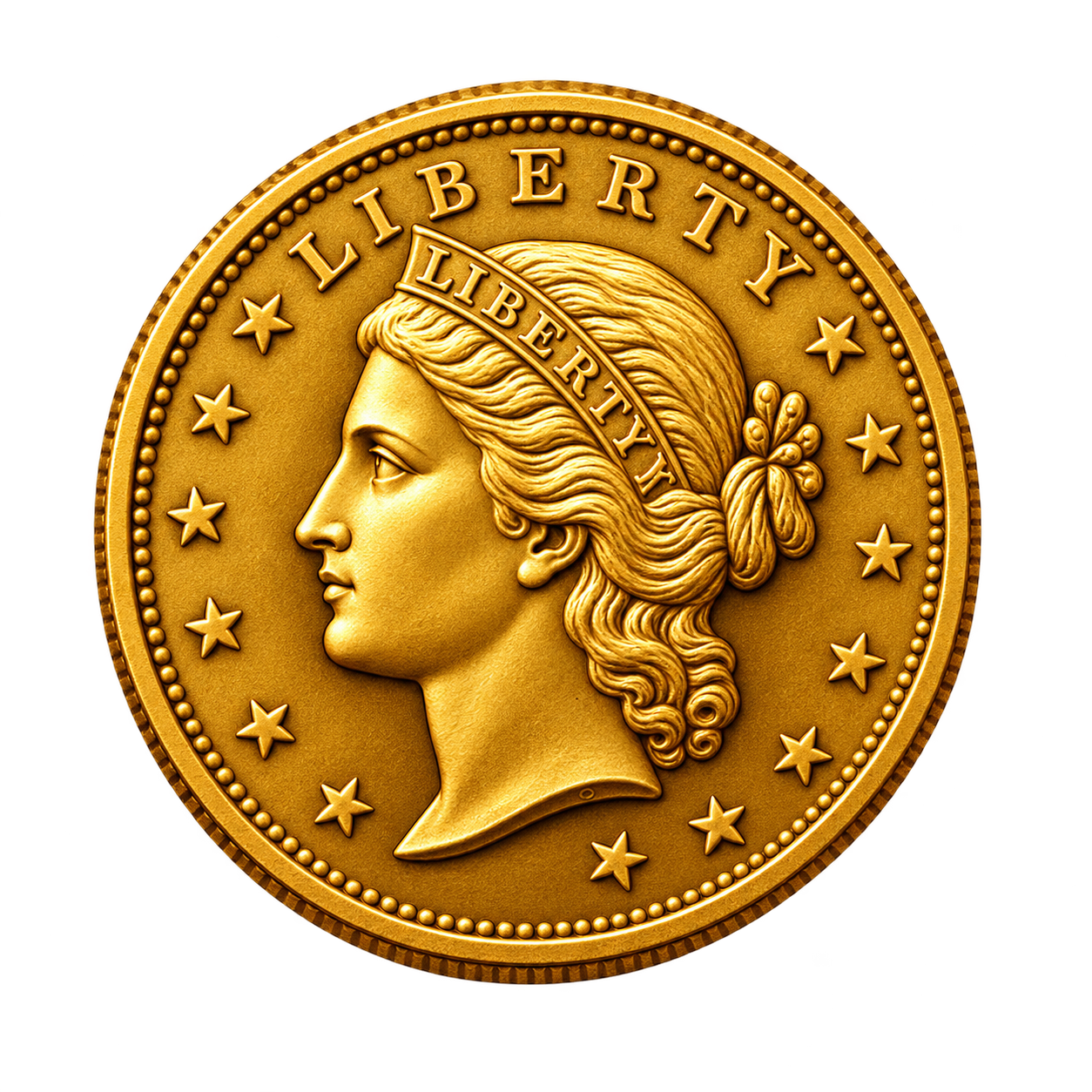
$2.50 Gold: the Quarter Eagle series
The quarter eagle was the smallest gold denomination of the 19th century, struck from 1796 to 1929.
By Royal Coins · Educational guideA small but historic gold coin
The $2.50 gold piece, or quarter eagle, was authorized in 1792 and first struck in 1796. It was the smallest gold coin in early American commerce and carried the Capped Bust, Classic Head, Liberty Head (Coronet), and Indian Head designs. The Indian Head quarter eagle (1908–1929) features an incuse design—recessed into the coin rather than raised—that is unique in U.S. coinage.
Rarities and key dates
Early quarter eagles are scarce across the board, and the 1796 No Stars and 1808 are important one-year types. The 1841 is known as the “Little Princess” and is a famous proof-only rarity. Indian Head quarter eagles are more approachable, but many dates are scarce in high grade with strong eye appeal.
Collecting gold responsibly
Gold coins require careful handling and storage. Original surfaces, natural toning, and the absence of cleaning are critical to value. Because gold is soft, many survivors show handling marks. A type set—one Coronet and one Indian Head quarter eagle—is a realistic and rewarding goal, while a date run of Indian Head quarters is a respected advanced pursuit.
Have a question about your collection?
Call 713-664-0881 or visit Royal Coins at 4658 Beechnut St, Houston, TX 77096.
Talk to Royal CoinsFor educational purposes only. Not investment advice or a valuation of any specific item.