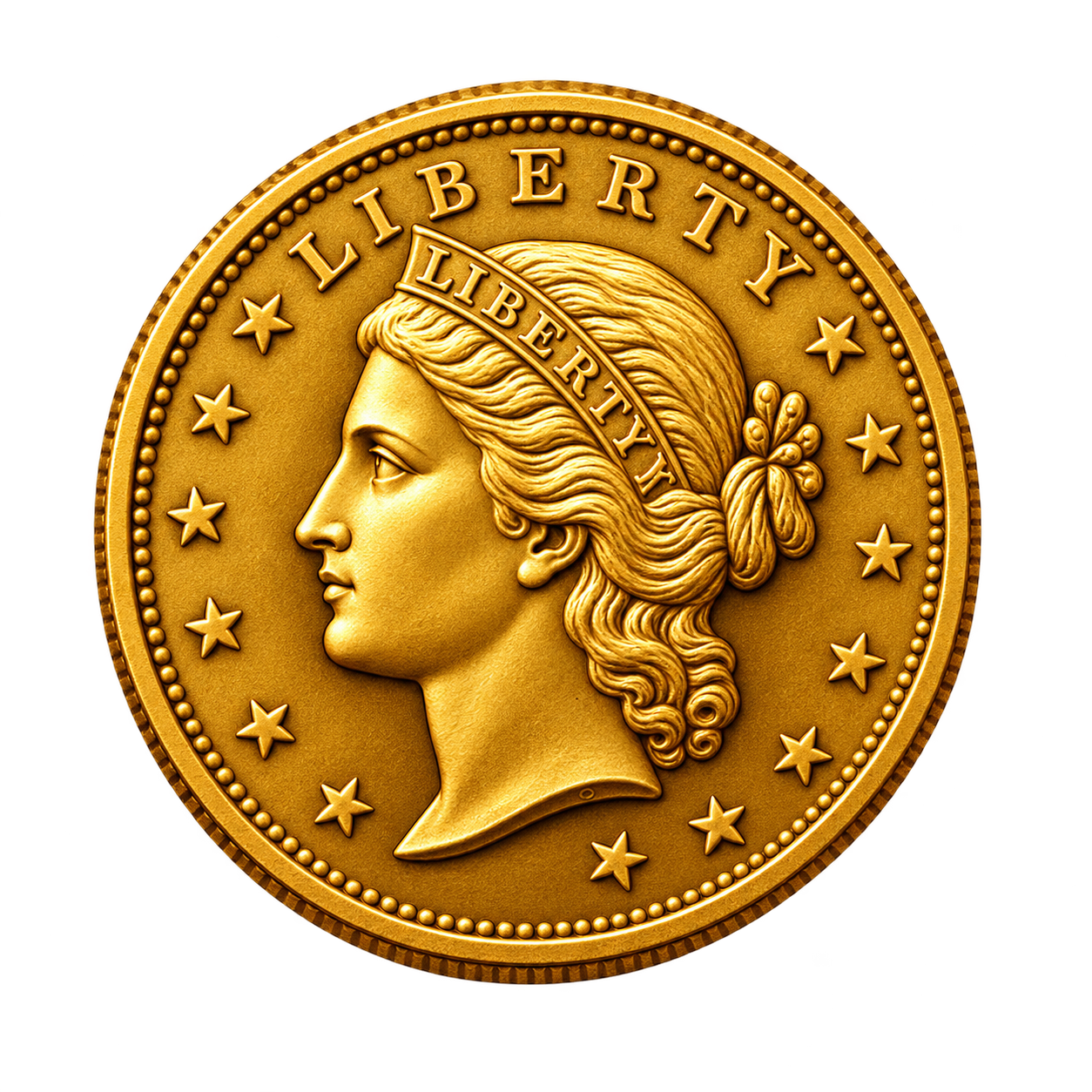
Large Cents: the copper workhorse of early America
Struck from 1793 to 1857, large cents were the coins Americans handled most in the nation’s first decades.
By Royal Coins · Educational guideBigger than today’s quarter
Large cents were about the size of a modern half dollar and made of pure copper. They were struck every year from 1793 to 1857 except 1815, when a copper shortage and the War of 1812 interrupted production. For most of the 19th century they were the coin most likely to be in a working person’s pocket.
A series of distinct types
The series includes the Chain, Wreath, and Liberty Cap cents of 1793; the Draped Bust (1796–1807); Classic Head (1808–1814); Coronet (1816–1839); and Braided Hair (1840–1857). The 1793 cents are famous one-year types, and the 1799 and 1804 large cents are legendary rarities that anchor advanced collections.
Grading and eye appeal
Because large cents circulated heavily, high-grade examples are scarce and prized. Toning, strike sharpness, and the absence of porosity or cleaning matter as much as the date. Many collectors build a type set of one coin per design, while others pursue date runs within a single type. Either approach is rewarding and surprisingly approachable for the middle dates.
Have a question about your collection?
Call 713-664-0881 or visit Royal Coins at 4658 Beechnut St, Houston, TX 77096.
Talk to Royal CoinsFor educational purposes only. Not investment advice or a valuation of any specific item.